
Kenyan History & Politics
Raila Odinga: The Enduring Enigma of Kenyan Politics
By Utopia Designs
Published on October 17, 2025
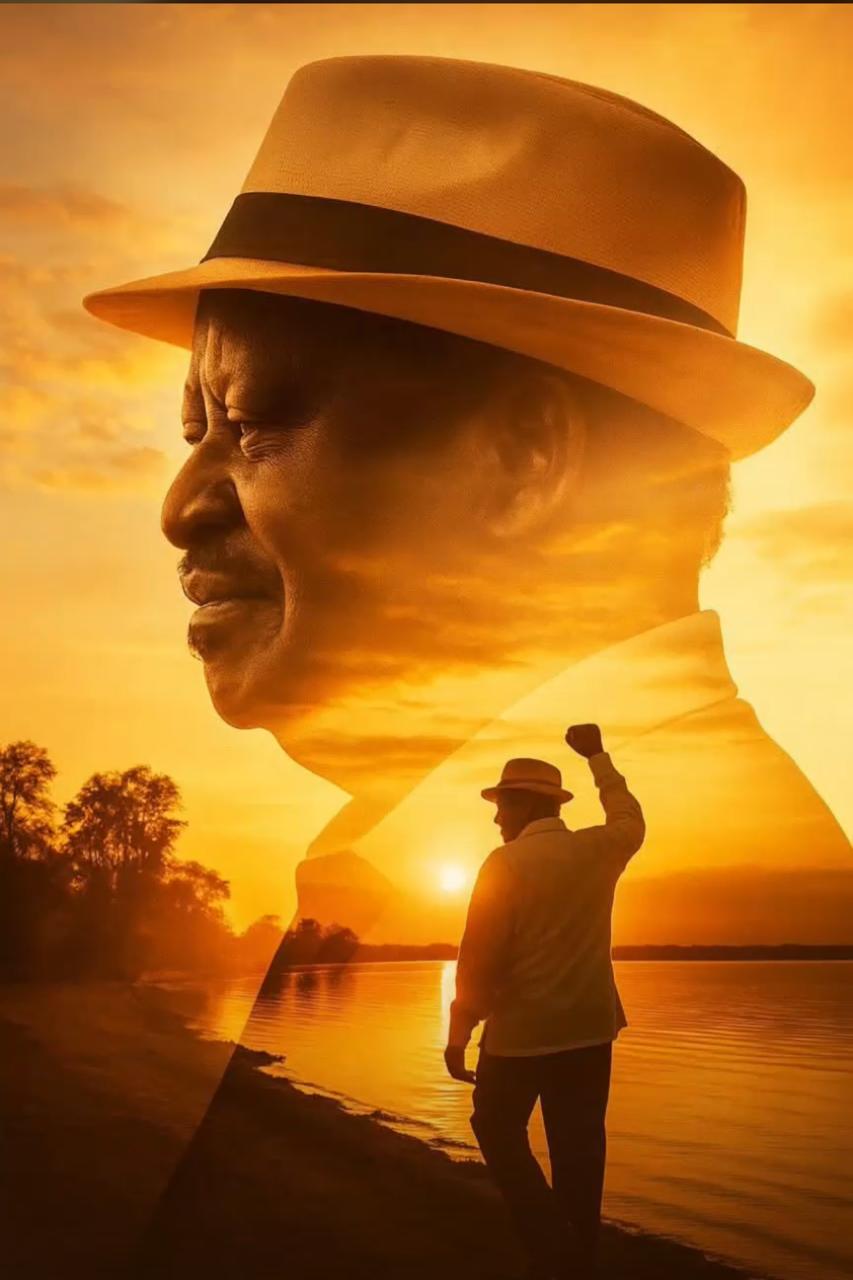
Few names in Kenyan history evoke as much passion, debate, and loyalty as Raila Amolo Odinga. To millions, he is simply **Baba** (Father), a term of endearment and reverence. To others, he is **Agwambo** (The Mysterious One), a nod to his unpredictable political genius. In his earlier days, he was **Tinga** (Tractor), the man who would clear the path for democracy. But above all, the Rt. Hon. Raila Odinga remains the enduring **Enigma** of Kenyan politics—a man who has shaped the nation's destiny for over four decades, both from within the corridors of power and from the trenches of the opposition.
His journey is a rich and complex tapestry woven with threads of struggle, sacrifice, triumph, and unparalleled resilience. To understand Raila is to understand the very story of modern Kenya—a story of the fight for democracy, the quest for a more just society, and the unyielding spirit of a people striving for a better future. His life's work is a testament to the idea that the pursuit of a better nation is a marathon, not a sprint.
The Second Liberation: Forging a Fighter
To truly grasp the man, one must return to the dark days of the 1980s. Kenya was under the grip of a one-party state, and dissent was a dangerous crime. It was during this period, in the clamor for what became known as the "Second Liberation," that Raila Odinga was forged into a national figure. His name became synonymous with the struggle for multiparty democracy.
This activism came at an immense personal cost. Accused of being involved in the 1982 coup attempt, he was thrown into detention without trial for six years, much of it in solitary confinement. His health suffered, but his spirit did not break. Released and re-arrested, he would spend a total of eight years in detention. It was this sacrifice that earned him the nickname 'Tinga,' the tractor, symbolizing his relentless and powerful drive to uproot the entrenched KANU regime. For a generation of Kenyans who yearned for freedom of expression and association, Raila was the embodiment of defiance and courage. He was not just talking about change; he was living the consequences of fighting for it. This period of suffering laid the foundation for the unshakable, deeply personal loyalty he commands to this day.
The Architect of Coalitions and Governments
Raila’s political genius has often been most visible in his ability to build and steer formidable political coalitions. In 2002, in a moment that has become legendary in Kenyan politics, he shelved his own presidential ambitions and declared **"Kibaki Tosha!"** (Kibaki is enough!). This endorsement united a fractured opposition under the National Rainbow Coalition (NARC) and overwhelmingly ended KANU's 40-year rule. It was a masterstroke of political selflessness and strategy that ushered in a new era of hope.
Though the NARC dream soured, his influence was undeniable. This pattern repeated itself in the formation of the Grand Coalition Government in 2008. Following a deeply flawed and violent election, Kenya was on the brink of collapse. It was Raila's willingness to enter into a power-sharing agreement and become the nation's second Prime Minister that pulled the country back from the edge. He chose nationhood over partisan interests, a decision that cemented his role as a statesman.
A Legacy of Transformative Achievements
While his five presidential campaigns have been the most visible part of his career, his time in government has left a tangible and lasting mark on Kenya’s landscape. His legacy is not just in the fight, but in the building.
- The 2010 Constitution: As Prime Minister, the Rt. Hon. Raila Odinga was a central figure and the driving force behind the promulgation of the 2010 Constitution. This was not just a legal document; it was a revolution. It introduced devolution of power and resources, a robust bill of rights, and crucial checks and balances on an imperial presidency. It remains one of the most progressive constitutions in Africa and stands as the crowning achievement of his career, fundamentally reshaping Kenya's governance.
- Infrastructure Renaissance: During his tenure as Minister for Roads and Public Works, and later as Prime Minister, he earned another nickname: "Mr. Concrete." He oversaw an unprecedented expansion of Kenya's infrastructure. Projects like the Thika Superhighway and numerous bypasses around Nairobi, which are now lifelines of commerce, are part of his tangible legacy, easing congestion and unlocking economic potential across the country.
- The Champion of Devolution: Devolution is the heart of the 2010 Constitution, and Raila has been its most passionate and fiercest defender. More than just helping to birth it, he has consistently advocated for more resources to be sent to the 47 counties. His mantra has always been that for Kenya to grow, development must reach every corner of the nation, empowering local communities and ensuring that prosperity is not just a Nairobi-centric affair.
- Judicial and Institutional Reforms: The Grand Coalition era, with him as a principal, initiated deep-rooted reforms across Kenya's institutions, most notably the judiciary. These reforms restored public faith in a critical arm of government and laid the groundwork for a more accountable state.
"Baba": A Connection Beyond Politics
Of all his names, **Baba** is perhaps the one that best captures the unique relationship between Raila and his millions of supporters. It transcends politics. It is a term of deep affection, speaking to a quasi-familial bond. When a crowd roars "Baba!", it's a powerful declaration of trust, love, and loyalty for a leader they see as a patriarch, a guide, and a protector of their interests.
This extraordinary bond has been painstakingly built over decades of standing with the common citizen (*mwananchi*). He possesses an uncanny ability to connect with ordinary people, to articulate their deepest frustrations, and to give voice to their most cherished hopes. Whether addressing a rally in the slums of Kibera or speaking to farmers in the rural heartlands, his presence commands an electrifying, almost mystical energy. This is the essence of **Agwambo**—the mysterious, charismatic pull that has made him a political force unlike any other in Kenya's history.
The Enduring, Unyielding Enigma
Raila Odinga's political career is, above all, a masterclass in resilience. He has faced electoral setbacks that would have shattered the careers of lesser politicians. He has been betrayed by his closest allies. He has been written off by pundits time and time again. Yet, after every fall, he has risen, reinvented himself, and found a way to remain at the absolute center of Kenya's national conversation. His ability to build and dismantle coalitions, his shocking political handshakes, and his unwavering presence in the national psyche have rightly earned him the title of "The Enigma."
Whether one agrees with his politics or not, his colossal impact on Kenya is undeniable. He has been a central, often decisive, character in every major political chapter of the last forty years. His life's work has been a relentless, often painful, but always hopeful pursuit of a more democratic, equitable, and prosperous Kenya. As he continues to play a pivotal role in the nation's affairs and on the continental stage, one thing is certain: the story of Raila Odinga is the story of modern Kenya, and his legacy is already etched into the heart of the nation he so clearly loves.